E-drive in everyday life - 3 things decision-makers should know
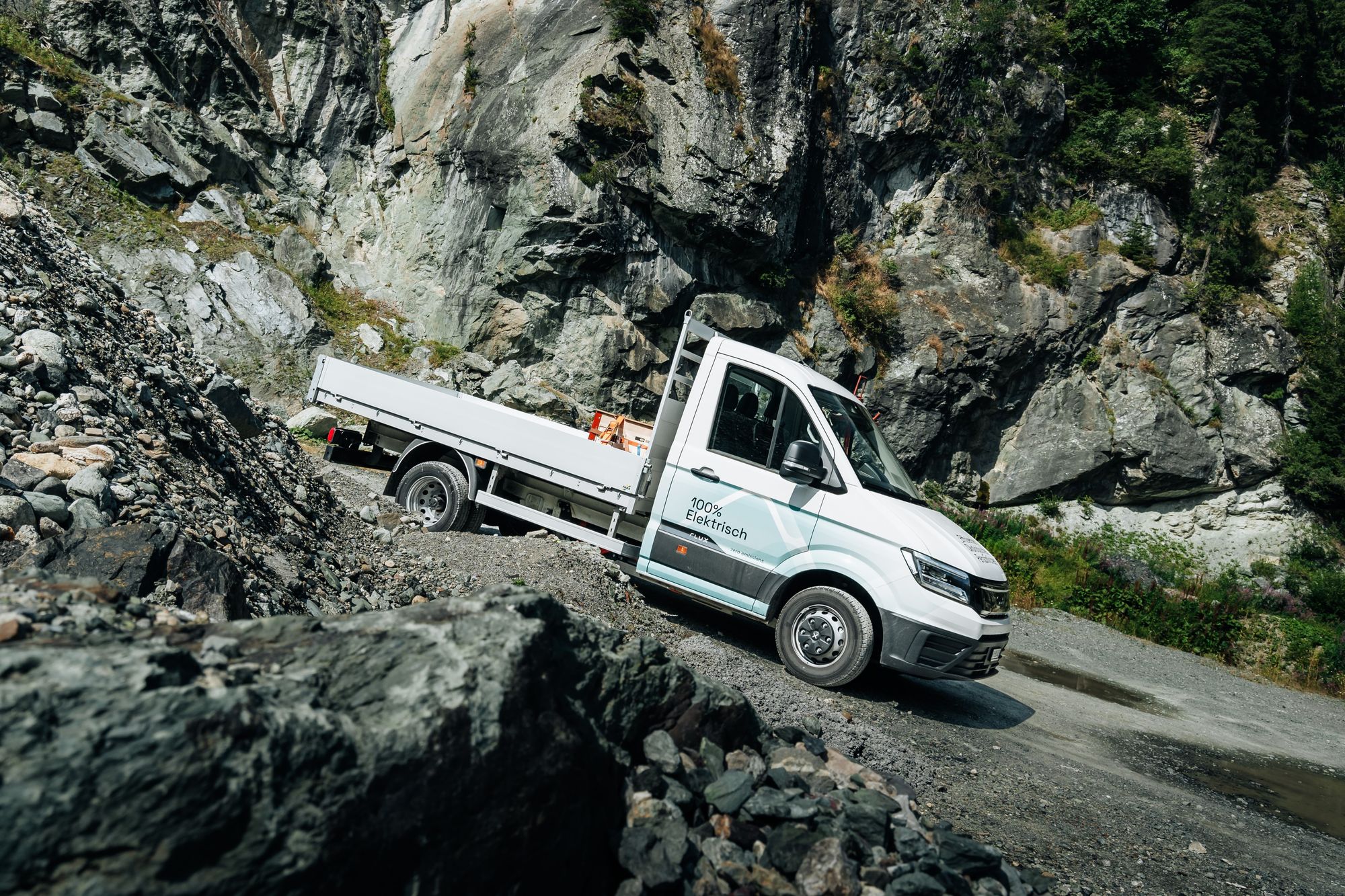
Electric drives have long been an integral part of modern mobility in Switzerland. More and more municipalities are turning to electric commercial vehicles to reduce operating costs, achieve sustainability goals and build future-proof fleets. For decision-makers in the technical or commercial sector, it is worth taking a closer look: What advantages does the e-drive actually bring in everyday life - and what is important when making the switch?
Electric vehicles reduce local emissions to zero and make a significant contribution to achieving Switzerland's climate targets. According to the Swiss Federal Office of Energy (SFOE ), strict CO₂ limits will apply from 2025: 93.6 g/km for passenger cars and 153.9 g/km for light commercial vehicles. The e-drive is the most effective solution for meeting these requirements.
Switzerland benefits from its clean energy mix - more than 60% of its electricity comes from hydropower. As Electrek reports, life cycle analyses show that electric vehicles offset their carbon footprint after a few years despite higher production costs. Municipalities and companies that rely on renewable energy sources therefore drive almost emission-free.
In practice: Flux Mobility AG vehicles help municipalities to achieve their sustainability goals - with powerful, fully electric commercial vehicles that enable emission-free maintenance, transportation and works service operations.
E-mobility pays off. According to an analysis by AXA, the operating costs of electric vehicles are between 50% and 70% lower than those of comparable diesel models. Reasons: lower energy costs, fewer wearing parts and predictable maintenance.
The acquisition costs are also becoming increasingly balanced. While the purchase price is still slightly higher than that of conventional combustion engines, cantonal subsidy programs and tax incentives are significantly reducing the financial outlay.
Example calculation: Charging an e-vehicle costs on average only CHF 5-6 per 100 km - significantly less than a diesel vehicle with seven to eight liters of fuel consumption over the same distance. This is a clear economic advantage for fleets with high driving volumes.
An electric drive means less complexity. Immediate power delivery, quiet operation and intuitive handling make everyday life easier. Municipalities benefit from vehicles that work reliably even at low temperatures or in recovery operations.
Thanks to Flux Mobility AG 's modular concept, electric commercial vehicles can be adapted precisely to the user's requirements - from body variants and range to the right charging solution.
Technical highlights of Flux Mobility AG:
Well thought-out charging planning is crucial. According to the Swiss Federal Office of Energy, there are over 16,000 public charging points in Switzerland - and the trend is rising. The Electric Mobility Roadmap 2025 is aiming for 20,000 stations.
The charging infrastructure is increasingly being supplemented by intelligent systems. According to Zoniq, fast chargers with 150 kW or more are already available across the board. Technologies such as bidirectional charging (vehicle-to-grid) make it possible to feed surplus energy back into the grid - an important step towards greater grid stability and energy efficiency.
Tip: Municipalities should plan their charging solutions together with energy suppliers to avoid peak loads and ensure a reliable power supply.
The range of modern electric commercial vehicles has long exceeded previous expectations. Batteries with a capacity of over 100 kWh enable all-day use in plant services, construction or transportation. As Virta Global reports, new high-voltage systems significantly reduce charging times - fast charging is possible in less than 30 minutes.
With appropriate fleet management, driving profiles and energy consumption can be optimized so that no range problems arise even in demanding operations.
Getting started with e-drives is an investment in the future. According to the Swiss National Science Foundation, economic efficiency and TCO (total cost of ownership) are constantly improving - not least due to falling battery prices.
For municipalities and companies, Flux Mobility AG offers flexible financing and leasing models that create planning security. Thanks to 1:1 replacement options for existing diesel vehicles, the changeover is possible without having to adapt deployment logistics.
Electromobility is developing rapidly. Advances in battery technology, range and charging speed are changing the market. According to the EV Charging Summit, AI-supported systems are already revolutionizing the charging experience - from predictive maintenance to automatic grid optimization.
Vehicle-to-grid technologies, such as those being tested by Shell, create new opportunities to actively integrate vehicles into the energy system. This will make electromobility an integral part of Switzerland's energy future.
The proportion of electric vehicles in Switzerland continues to grow: according to Swisscharge, BEVs already accounted for over 20% of new registrations in mid-2025 - and the trend is rising. According to the Alternative Fuels Observatory, the share is expected to be almost 100% by 2030.
Political measures such as the law on the non-prohibition of charging stations also facilitate the expansion of private charging points - a further boost for suitability for everyday use and acceptance.
For decision-makers in technology and management, what counts now is strategic action:
The e-drive is the logical response to rising energy costs, CO₂ regulations and growing sustainability requirements. Municipalities and companies that make the switch today will secure long-term benefits - environmentally, economically and socially.
As a Swiss partner, Flux Mobility AG stands for technical excellence, customer proximity and practical solutions. Whether for plant services, transportation or construction - electric commercial vehicles from Flux Mobility are ready for everyday use.
Contact us now: www.fluxmobility.ch/kontakt